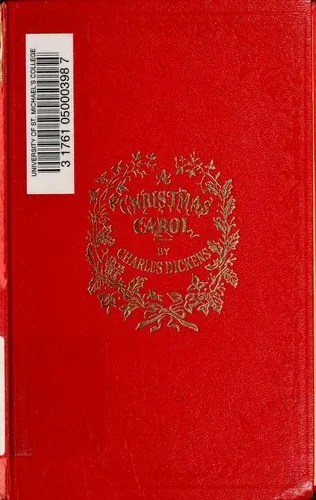
Ebenezer Scrooge is a miserly counting-house owner in Victorian London who prioritizes financial accumulation over human connection. On a cold Christmas Eve, the ghost of his former partner, Jacob Marley, appears draped in heavy chains to warn him of a similar fate. Scrooge is then visited by three spirits: the Ghost of Christmas Past, who reveals his lonely childhood and lost love; the Ghost of Christmas Present, who shows the struggles of the Cratchit family; and the Ghost of Christmas Yet to Come, who displays Scrooge’s own unmourned death. These encounters force him to witness the consequences of his greed and the impact of his cruelty on those around him.
Readers of classic fiction and Victorian literature return to this story to observe a drastic shift in character and personal ethics. The narrative serves those interested in the mechanics of repentance and the social responsibilities of the wealthy toward the poor. Upon finishing the book, a reader understands the specific value of charitable living and the importance of fostering community. It provides a concrete example of how memory and empathy can alter a person's behavior within their local society.
Contemplative and clear-cut; an easy read.
Best for readers like The Empathetic Explorer. Which reader are you?
Insights from A Christmas Carol
“External heat and cold had little influence on Scrooge.”
Scrooge keeps his office freezing to save a few pennies. It shows how being cheap can turn into a literal coldness of the soul.
“I wear the chain I forged in life.”
Marley's ghost is covered in heavy iron chains. He made them himself by focusing only on money while he was alive.
“A solitary child, neglected by his friends, is left there still.”
The Ghost of Christmas Past shows Scrooge as a lonely kid left at school. Even the meanest people usually have a very sad beginning.
“The happiness he gives, is quite as great as if it cost a fortune.”
Fezziwig threw a party that didn't cost much but made everyone feel loved. A boss has so much power to make life good or miserable.
- Published
- 1843
- Publisher
- Bethany House Publishers
- ISBN
- 9781561797462
- Language
- EN
Quotes by Charles Dickens
More →It was the best of times, it was the worst of times, it was the age of wisdom, it was the age of foolishness.
A Tale of Two Cities