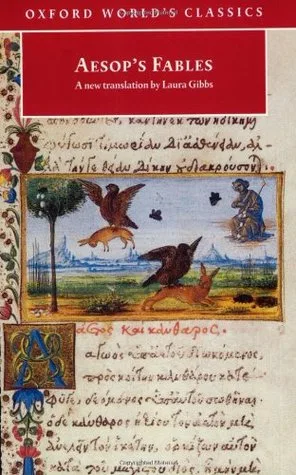
This collection assembles traditional Greek allegories featuring a cast of anthropomorphic animals who face dilemmas centered on human behavior. Each brief narrative, such as the race between the slow tortoise and the arrogant hare or the interaction between the lion and the tiny mouse, illustrates a specific social or ethical consequence. The characters demonstrate traits like greed, vanity, and cleverness through their encounters in the natural world. These stories culminate in pithy statements that define virtues such as hard work, gratitude, and tactical thinking in the face of conflict.
Young readers and students use this text to understand basic moral structures and situational irony. The simple prose makes these complex social concepts accessible to children, allowing them to identify how specific choices lead to success or failure. Readers walk away with a vocabulary for discussing ethics and a set of archetypes that apply to everyday human interactions. The volume serves as a foundation for recognizing cultural references and understanding the historical roots of western storytelling through clear, illustrative examples of cause and effect.
Contemplative and clear-cut; an easy read.
Best for readers like The Escapist Adventurer. Which reader are you?
Insights from Aesop’s Fables
“No act of kindness, no matter how small, is ever wasted.”
The lion and the mouse show how small acts of mercy return to us later. Power doesn't last forever. Even the strongest person eventually needs a hand from someone they once overlooked.
“Slow and steady wins the race.”
Slow and steady actually wins because the fast person gets cocky. The hare didn't lose because he was slow. He lost because he thought he had already won.
“It is easy to despise what you cannot get.”
We often pretend to hate what we can't have just to save face. It's easier to call the grapes sour than to admit we aren't tall enough to reach them.
“A liar will not be believed, even when he speaks the truth.”
The boy who cried wolf reminds me that honesty is a bank account. Once you spend your credibility on a joke, nobody believes you when the danger is real.
- Published
- 2002
- Publisher
- Oxford University Press
- ISBN
- 9780192840509
- Language
- EN