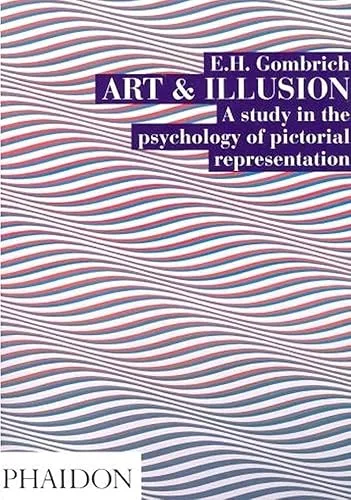
Art and Illusion: A Study in the Psychology of Pictorial Representation
E.H. Gombrich investigates the shift from conceptual art to perceptual realism by analyzing how artists interpret the visible world. He rejects the notion that painters possess an innocent eye, arguing instead that representation relies on a process of making and matching. Artists start with a mental schema—a learned vocabulary of forms—and gradually adjust these templates through trial and error to fit observations. This framework explains why different eras and cultures maintain distinct styles, as the artist is always constrained by the pictorial traditions they inherit.
Art historians, cognitive scientists, and visual artists study this text to understand the mechanisms of human perception and artistic evolution. Readers learn how the brain decodes two-dimensional marks into three-dimensional spaces, moving beyond the idea that art is a simple imitation of nature. The book provides a technical foundation for analyzing style not as a matter of skill, but as a systematic development of visual hypotheses. One gains a clear mental model for how cultural conventions influence individual sight.
Deep; a demanding read.
Best for readers like The Deep Diver. Which reader are you?
- Published
- 1960
- Language
- EN