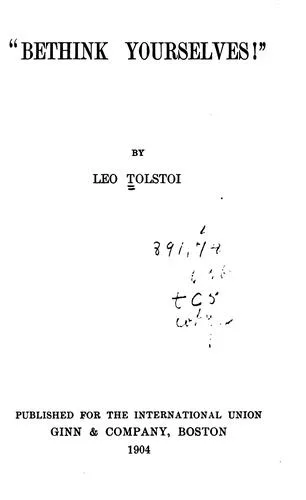
In this 1904 manifesto, Leo Tolstoy issues a scathing condemnation of the Russo-Japanese War, arguing that state-sponsored violence is fundamentally incompatible with the moral imperatives of Christianity. He rejects the geopolitical justifications for the conflict, asserting that soldiers and citizens violate their own consciences by participating in military mobilization. Tolstoy examines the psychological dissonance required for individuals to kill on behalf of a government. He advocates for non-resistance to evil through force and categorical individual refusal to obey state orders that mandate violence or conscription.
This text serves readers interested in historical pacifism, Christian anarchism, and the ethics of civil disobedience. Scholars and activists study these pages to understand how Tolstoy connects personal spiritual accountability to the rejection of nationalistic aggression. The reader walks away with a framework for individual resistance against state authority and a clear articulation of how religious conviction can be used to dismantle the legitimacy of war. It provides a historical perspective on the internal struggle between institutional duty and private moral law.
Deep and contemplative; a moderate read.
Best for readers like The Mindful Reader. Which reader are you?
- Published
- 1904
- Language
- EN