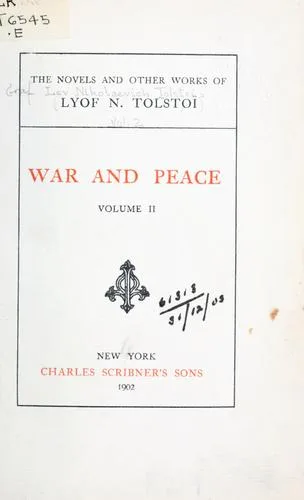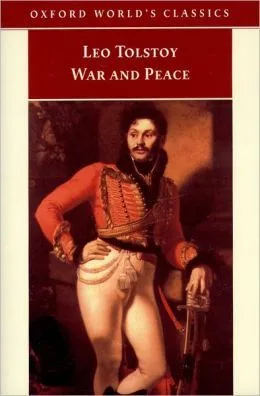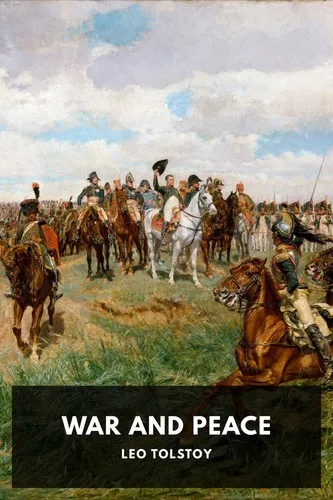
Leo Tolstoy’s narrative tracks the intersecting lives of three main aristocratic families—the Rostovs, Bolkonskys, and Kuragins—during Napoleon’s invasion of Russia. Pierre Bezukhov struggles with his massive inheritance and a search for spiritual certainty, while Prince Andrei Bolkonsky seeks military glory and later finds disillusionment on the battlefield. The text moves from the elite salons of St. Petersburg to the front lines at Borodino and Austerlitz. Tolstoy rejects the "Great Man" theory of history, arguing instead that historical outcomes result from the collective actions of millions of common individuals rather than the strategic decisions of generals or emperors.
Students of history and philosophy read this work to understand the specific social structures of nineteenth-century Russia and the mechanics of human motivation during wartime. The reader gains a granular perspective on how individual psychology interacts with large-scale political turbulence. Someone finishing the book walks away with a framework for viewing history as a chaotic, decentralized process and a detailed map of the moral development possible within a decaying social hierarchy. It serves those interested in the friction between personal agency and historical necessity.
Deep, contemplative and thought-provoking; a moderate read.
Best for readers like The Wisdom Collector. Which reader are you?
- Published
- 1864
- Language
- EN