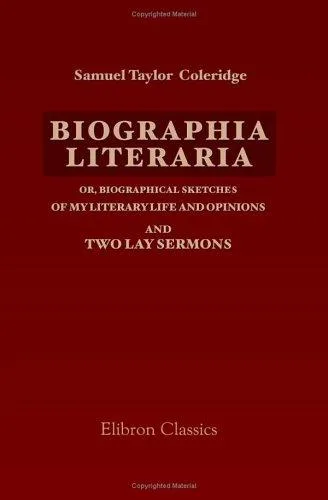
Published in 1817, this work functions as a combined intellectual autobiography and a rigorous manifesto of literary theory. Coleridge rejects the mechanical philosophy of the Enlightenment to argue for the supremacy of the human imagination. He distinguishes between the primary imagination, which allows for human perception, and the secondary imagination, which consciously creates art. A significant portion of the text addresses his collaborative history with William Wordsworth, specifically critiquing Wordsworth’s theories on poetic diction. Coleridge analyzes the technical structure of the ballad and the sonnet while integrating Kantian aesthetics and German transcendentalism into English thought.
This text attracts scholars of Romanticism and students of cognitive philosophy who seek to understand the mechanics of creative thought. Readers analyze the distinction between fancy and imagination to refine their own critical approach to metaphors and symbols. By engaging with these chapters, a reader gains a framework for evaluating the relationship between a writer’s internal psychological state and the formal structure of their verse. It serves as a foundational study for anyone investigating the transition from eighteenth-century rationalism to the subjective focus of modern literature.
- Published
- 1817
- Language
- EN
More by Samuel Taylor Coleridge
See all →
Readers also enjoyed