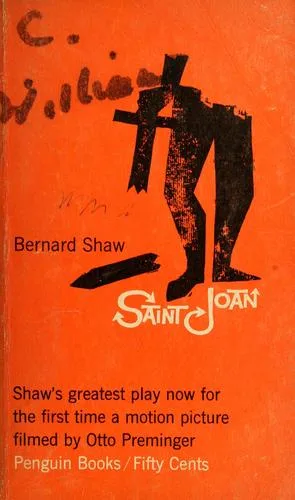
George Bernard Shaw depicts the trial and execution of Joan of Arc, positioning her as a prototype for modern nationalism and Protestantism. The narrative follows Joan from her successful military campaign at Orleans to her capture by Burgundian forces and subsequent ecclesiastical trial at Rouen. Rather than presenting a simple conflict between good and evil, Shaw portrays the Inquisitor and Peter Cauchon as rational actors defending the established feudal and Catholic order against Joan’s insistence on private judgment and direct divine inspiration. Her conviction for heresy rests on her refusal to submit her internal voices to the authority of the Church.
History enthusiasts and students of political theory read this work to understand the shift from medieval collectivism to individual conscience. The play appeals to those interested in how state power reacts to disruptive genius. Readers walk away with an analysis of how judicial systems process individuals who bypass traditional hierarchies. By examining the 1920 canonization alongside the 1431 trial, the text forces an evaluation of how society eventually honors the same rebels it once found legally necessary to destroy.
Deep; a moderate read.
Best for readers like The Deep Diver. Which reader are you?
- Published
- 1924
- Language
- EN