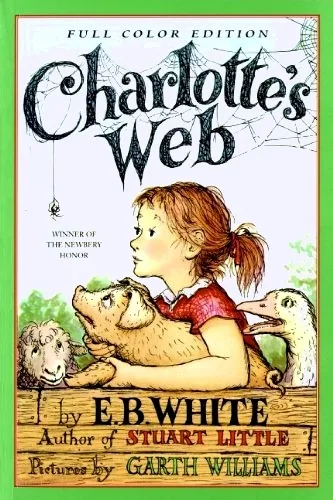
After Fern Arable saves a runt pig named Wilbur from her father’s axe, the animal is moved to a nearby farm where he faces an eventual winter slaughter. He finds an unlikely savior in Charlotte A. Cavatica, a common barn spider living in the rafters. Using her web, Charlotte weaves specific adjectives like "Some Pig" and "Terrific" to convince the local community that Wilbur is a miraculous creature. The story tracks Wilbur’s growth from a frightened piglet into a prize-winning hog, culminating in a seasonal shift that brings both life and death to the barnyard.
Children and adults read this story to encounter a clear-eyed depiction of the natural lifecycle. It serves as an introduction to the logistics of farm life and the inevitability of loss. Readers walk away with a specific understanding of how friendship functions as a buffer against fear. The book provides a framework for discussing mortality and the way memory persists through a legacy of care, as Wilbur eventually takes responsibility for Charlotte’s offspring after she passes away.
Contemplative and thought-provoking; an easy read.
Best for readers like The Mindful Reader. Which reader are you?
Insights from Charlotte’s Web
“Where's Papa going with that ax?”
Wilbur starts out so small and helpless that he needs Fern to save him. It makes me think about how we all need a little extra help when we first start out.
“A spider's web is stronger than it looks.”
Charlotte is just a tiny spider in a big barn. She shows how much influence one quiet voice can have if it says the right thing.
The way Fern eventually stops visiting the barn feels so heavy. Growing up means leaving behind the magic you used to live for.
“The rat had no morals, no conscience, no scruples.”
Templeton only helps when there is something in it for him. He reminds me that even selfish people can end up doing something good for the world.
- Published
- 1952
- Language
- EN