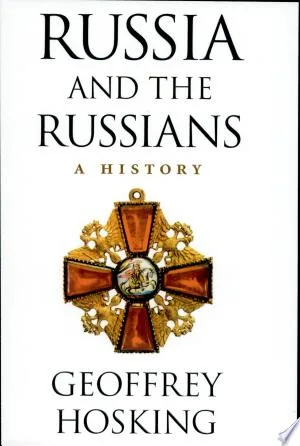
Geoffrey Hosking analyzes the tension between the expansion of the Russian state and the development of its national identity. He tracks this friction from the collapse of Kievan Rus’ and the period of Mongol dominance through the rise of the Romanov dynasty and the Soviet era. A central framework of the book is the idea that the demands of an overextended, multi-ethnic empire consistently smothered the growth of grassroots civic institutions and a unified sense of Russian "nationhood." Hosking documents how the autocracy prioritized military security and territorial reach over the internal stability of the peasantry and the Orthodox Church.
This history serves readers who want to understand the structural reasons for the fragility of Russian democracy following the collapse of the Soviet Union in 1991. It appeals to those seeking a long-term sociological perspective rather than a strictly political or military timeline. Readers gain a clear view of how geography and the lack of natural borders forced the state to become a rigid, centralized power. By the end, the reader recognizes the historical patterns of mobilization and repression that have prevented the emergence of a stable civil society in Eurasia.
Outward-looking; a moderate read.
Best for readers like The Evidence Seeker. Which reader are you?
- Published
- 2001
- Publisher
- Harvard University Press
- ISBN
- 9780674004733
- Language
- EN