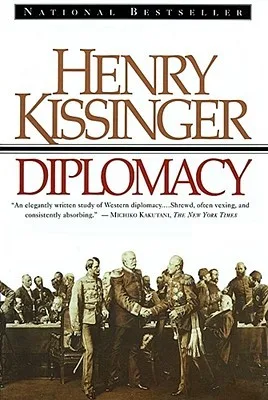
Henry Kissinger analyzes the tension between two competing approaches to American foreign policy: the idealistic pursuit of global democracy and the pragmatic calculation of the national interest. He traces the evolution of international relations from the Westphalian system and the 19th-century balance of power under Richelieu and Metternich to the modern era. The narrative juxtaposes Theodore Roosevelt’s realism with Woodrow Wilson’s moralism, arguing that successful diplomacy requires an equilibrium of power rather than reliance on collective security or abstract legal principles.
Historians and political scientists read this work to understand the strategic rationale behind realpolitik and the structural causes of global instability. It serves as a technical manual for those analyzing how great powers manage conflict and form alliances. Readers gain a framework for interpreting current geopolitical shifts through the lens of historical precedent. By the end, the audience understands the constraints placed on states by geography and history, moving beyond ideological rhetoric to identify how stability is maintained in a pluralistic world.
- Published
- 1994
- Language
- EN
More by Henry Kissinger
See all →


Readers also enjoyed