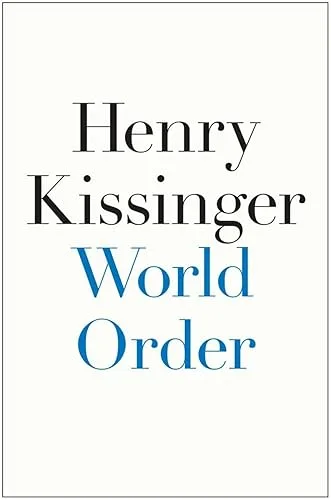
Henry Kissinger examines the historical evolution of geopolitical stability, beginning with the 1648 Peace of Westphalia. He analyzes how the European model of state sovereignty and balance of power contrasts with other regional systems, such as the Islamic concept of the caliphate, the Chinese "Middle Kingdom" hierarchy, and American democratic idealism. The narrative tracks how these disparate worldviews collided during the twentieth century, creating a fragmented global structure. Kissinger argues that contemporary international stability depends on reconciling Westphalian principles of order with the divergent cultural values of emerging powers.
Students of international relations and history read this book to understand the tension between state legitimacy and the distribution of power. Readers walk away with a framework for analyzing current conflicts in the Middle East and Asia through the lens of historical precedents rather than just modern headlines. The text provides a technical vocabulary for assessing how digital technology and nuclear proliferation challenge traditional diplomacy. It offers a realistic perspective on why universal cooperation remains difficult to achieve in a multipolar landscape.
- Published
- 2014
- Language
- EN
More by Henry Kissinger
See all →


Readers also enjoyed