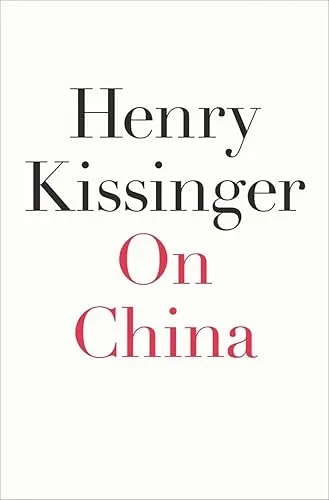
In On China, Henry Kissinger analyzes Chinese strategic behavior through the lens of history, comparing Western "chess" logic with the Chinese game of "weiqi." He argues that China's approach to statecraft is rooted in Sun Tzu’s preference for psychological advantage and long-term encirclement rather than direct confrontation. The narrative moves from the Qing Dynasty’s tributary system to the Cold War diplomacy of the 1970s, drawing on Kissinger’s own interactions with Mao Zedong and Zhou Enlai. He focuses specifically on "singularity"—China’s self-perception as a civilization rather than a traditional nation-state—and how this defines its modern foreign policy.
Students of international relations and geopolitical analysts read this book to understand the cultural motivations behind Beijing's tactical decisions. The text serves as a manual for recognizing how historical grievances and classical philosophy shape current territorial disputes and trade negotiations. A reader walks away with a framework for interpreting Chinese diplomacy not as a series of isolated events, but as a continuous effort to restore a perceived natural balance of power. It provides the specific historical context needed to predict how China might manage future friction with the United States.
- Published
- 2011
- Language
- EN
More by Henry Kissinger
See all →
Readers also enjoyed