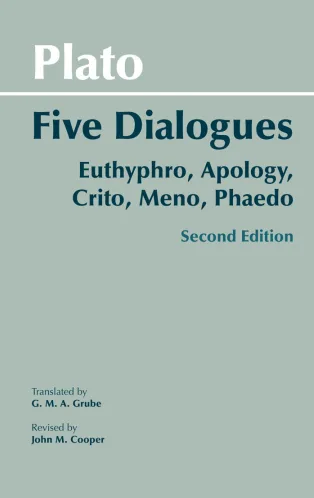
Plato presents the trial and execution of Socrates through several philosophical inquiries. In Euthyphro, characters debate the definition of piety versus what is merely loved by the gods. The Apology recounts Socrates defending his life against charges of impiety and corrupting youth, asserting that an unexamined life lacks value. Crito focuses on the obligation to obey state laws even during injustice. Meno investigates whether virtue can be taught and the nature of innate knowledge. Finally, Phaedo examines the immortality of the soul and the theory of forms as Socrates faces death.
Students and thinkers read these dialogues to understand the foundations of Western logic and ethics. The text serves those interested in the Socratic method, specifically how persistent questioning reveals contradictions in common beliefs. Readers gain a framework for analyzing moral definitions and the relationship between the individual and the state. By the end, the audience understands how Socrates prioritizes intellectual integrity over physical survival, providing a model for dialectical reasoning and the pursuit of objective truth in human conduct.
Deep, contemplative and open-ended; a moderate read.
Best for readers like The Wisdom Collector. Which reader are you?
- Language
- EN