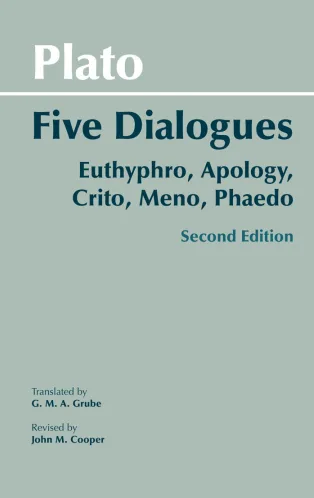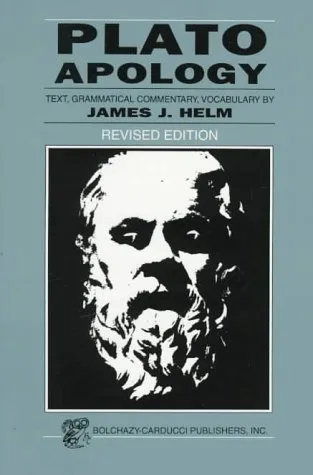
Plato’s text documents the legal defense of Socrates as he faces trial in Athens for impiety and corrupting the youth. Socrates rejects the accusations, arguing that his pursuit of wisdom stems from a divine mission to challenge those who falsely claim expertise. He details his method of cross-examination, an approach used to expose the contradictions in the logic of politicians, poets, and craftsmen. Rather than pleading for mercy, he asserts that a life without constant self-examination holds no value, ultimately accepting a death sentence as the logical consequence of his intellectual integrity.
Students of philosophy and ethics read this work to understand the origins of the Socratic method and the relationship between the individual and the state. It provides a foundational look at how to construct a logical defense under pressure and the importance of intellectual honesty. Readers walk away with a framework for questioning established authority and a definition of wisdom based on acknowledging the limits of one's own knowledge. It serves as a study in maintaining personal convictions when faced with systemic opposition.
Deep, inward-looking, contemplative and open-ended; a moderate read.
Best for readers like The Wisdom Collector. Which reader are you?
- Language
- EN