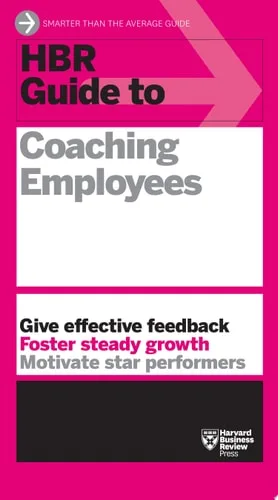
HBR Guide to Coaching Employees
The HBR Guide to Coaching Employees provides a manual for managers tasked with developing staff through active inquiry rather than direct instruction. The text details a specific methodology for holding coaching conversations, emphasizing the transition from a "command and control" style to a consultative role. It outlines steps for identifying a team member’s skill gaps, setting realistic developmental goals, and providing corrective feedback that maintains morale. Key concepts include the use of open-ended questions to foster independence, the distinction between formal coaching sessions and opportunistic "micro-coaching," and strategies for addressing high-potential employees versus underperformers.
Managers and team leaders read this book to build a toolkit for professional development. It appeals to supervisors who find themselves solving every problem for their staff and want to delegate more effectively. By following these frameworks, readers learn to foster autonomy within their teams and reduce their own daily workload. The reader walks away with specific scripts for difficult conversations and a structured plan for evaluating an employee's progress over a fiscal quarter or project lifecycle.
Insights from HBR Guide to Coaching Employees
“Coaching is a mindset, not a meeting.”
Coaching isn't an extra task on your plate. It is the job. If you don't have time for it, you shouldn't be managing.
“Specific feedback is actionable feedback.”
Generic praise is actually insulting. Be specific about what they did well. Otherwise, it just feels like empty fluff.
“The coachee must be the one to take action.”
The employee needs to own the plan. If you're the one writing the to-do list, they won't care about the results.
“Know where to draw the line.”
You aren't a therapist. Keep the focus on work goals and professional growth. Don't get sucked into their personal drama.
- Published
- 2015
- Publisher
- Harvard Business Press
- ISBN
- 9781625275332
- Language
- EN