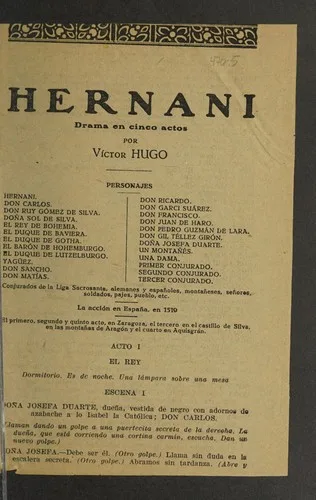
Set in sixteenth-century Spain, the play follows the outlaw Hernani as he attempts to reclaim his noble title and avenge his father’s death against King Carlos. Both men, along with the elderly Duke Ruy Gomez de Silva, seek the hand of Doña Sol. The plot centers on a rigid code of honor that ultimately demands a fatal sacrifice. When the King ascends to become Holy Roman Emperor, he pardons his enemies, but a previous oath forcing Hernani to take his own life at the sound of a horn brings the tragedy to a violent conclusion.
Students of French literature and theater history read this work to understand the shift from Neoclassical rules to Romantic drama. It provides a technical example of how Hugo broke traditional unities of time and place while introducing a mix of high tragedy and grotesque realism. Readers walk away with a clear view of the aesthetic revolt that redefined nineteenth-century stagecraft and the specific mechanisms of the Spanish honor system as a narrative engine for tragic endings.
Thought-provoking; a moderate read.
Best for readers like The Story Seeker. Which reader are you?
- Published
- 1830
- Language
- EN