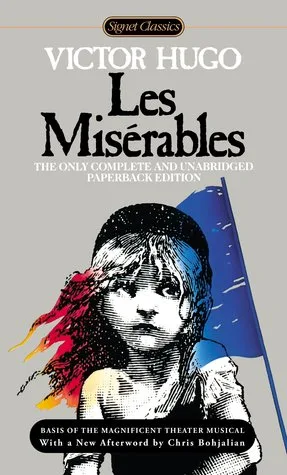
Jean Valjean exits a French prison after nineteen years of hard labor, a sentence triggered by stealing bread for his family. Following a bishop’s act of mercy, Valjean adopts a new identity and becomes a successful factory owner. He eventually assumes custody of Cosette, the daughter of a dying factory worker named Fantine. Throughout several decades, Inspector Javert pursues Valjean across Paris, driven by a strict adherence to legal code. Their lives intersect with a group of student revolutionaries during the 1832 June Rebellion, where the narrative focuses on poverty, penal law, and the struggle for personal change.
Readers interested in the intersection of legal history and social morality value this text for its granular detail on 19th-century French society. Historical fiction enthusiasts find specific accounts of convent life, the Battle of Waterloo, and the Parisian sewer tunnels. The book provides a meditation on the conflict between rigid civic law and individual mercy. One walks away with a clear understanding of the systemic forces trap the working class and the difficulty of escaping a criminal past.
Deep, contemplative and thought-provoking; a demanding read.
Best for readers like The Deep Diver. Which reader are you?
Insights from Les Misérables
Valjean stole a loaf of bread and it cost him nineteen years. It feels like the world still works that way for some people.
“I have bought your soul of you.”
Bishop Myriel changed a man's life with two silver candlesticks. Showing mercy when someone expects punishment is a massive act of rebellion.
“To be a saint is the exception. To be an upright man is the rule.”
Javert spends his whole life chasing a criminal who is actually a saint. It is scary how a strict sense of duty can blind you to goodness.
“Even the darkest night will end and the sun will rise.”
Marius and the students on the barricades were so young and full of hope. They died for a future they never got to see.
- Published
- 1862
- Publisher
- Penguin
- ISBN
- 9780451525260
- Language
- EN