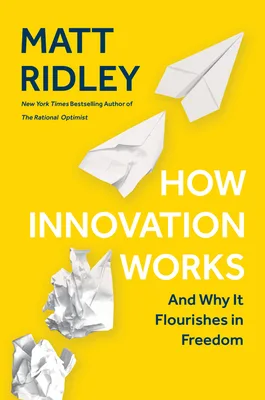
How Innovation Works: Serendipity, Energy and the Saving of Time
Matt Ridley argues that innovation is an evolutionary, bottom-up process rather than a top-down result of lone geniuses or government mandates. He examines historical breakthroughs like the steam engine, the search for vaccinations, and the development of the transistor to show that inventions usually appear simultaneously in different locations when the necessary components exist. The narrative defines innovation as the practical refinement of ideas to make them affordable and reliable, focusing on the trial-and-error necessary to turn a scientific discovery into a useful tool that saves human time.
Entrepreneurs and policymakers read this book to understand why certain regulatory environments stifle progress while others encourage it. The text provides a framework for distinguishing between basic invention and the long, collaborative struggle of commercialization. Readers walk away with the ability to identify the social and economic conditions that allow new technologies to thrive. It offers a perspective on how energy consumption and intellectual freedom drive the rising standard of living across different civilizations and eras.
- Published
- 2020
- Language
- EN
More by Matt Ridley
See all →