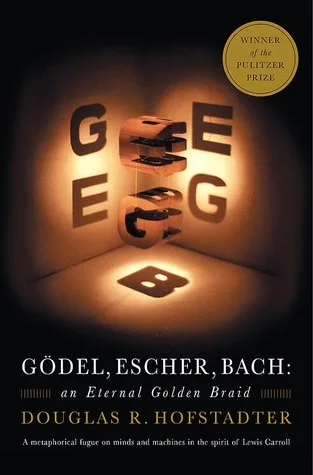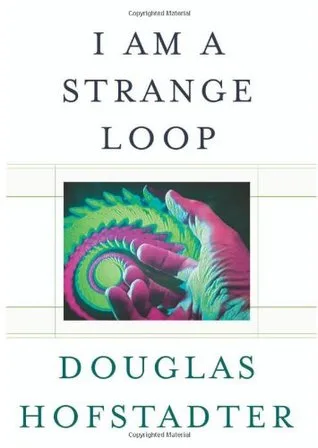
Douglas Hofstadter argues that the human "I" is an abstract mirage emerging from a specific type of self-referential mathematical structure. He builds on Gödel’s incompleteness theorems to show how symbols in a complex system can loop back to represent the system itself. This "strange loop" creates the feeling of a conscious center from inanimate neurological activity. By analyzing video feedback loops and self-referential logic, Hofstadter claims that the soul is not a physical substance but a persistent pattern that can exist across multiple brains.
Readers interested in the intersection of cognitive science and formal logic read this for a rigorous alternative to dualism. It appeals to those who want to understand the mechanics of identity without relying on mystical explanations. The reader walks away with a framework for viewing the self as a high-level representation of data rather than a biological entity. It provides a technical vocabulary for discussing how consciousness arises from the recursive processing of information.
Deep, inward-looking, contemplative and open-ended; a moderate read.
Best for readers like The Wisdom Collector. Which reader are you?
- Published
- 2007
- Language
- EN