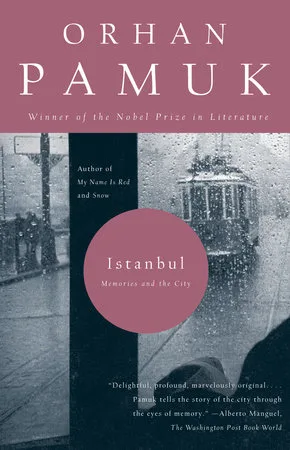
Orhan Pamuk constructs a portrait of Istanbul by weaving his personal upbringing together with the city’s collective history. Central to the narrative is the concept of hüzün, a specific type of communal melancholy arising from the physical decay of the Ottoman Empire’s former glory. Pamuk describes his childhood in a crowded apartment building, his early ambitions as a painter, and his walks through backstreets filled with crumbling wooden mansions. He examines how Western observers and local writers shaped the city's identity through a lens of ruin and nostalgia.
Readers interested in the intersection of geography and psychology read this book to understand how a physical environment dictates an individual's internal state. It appeals to those seeking a deep sense of place that moves beyond standard tourist itineraries. The reader gains a framework for viewing urban landscapes as historical palimpsests where personal memory and public architecture collide. By the end, they possess a nuanced vocabulary for the sadness inherent in changing landscapes and the ways a hometown can function as a mirror for the self.
- Published
- 2003
- Language
- EN
More by Orhan Pamuk
See all →
Readers also enjoyed