
Simone de Beauvoir documents her upbringing within a strict Parisian bourgeois family during the early twentieth century. She tracks her development from a pious child into an intellectually rebellious young adult. The narrative details her loss of religious faith, her academic pursuits at the Sorbonne, and her rejection of the domestic expectations placed on women of her class. Central to the work is her intense friendship with Zaza Mabille, whose tragic fate serves as a critique of rigid social conventions, and her eventual meeting with Jean-Paul Sartre.
Readers interested in the origins of existential philosophy and the sociological constraints of the French middle class study this text to understand how individual identity forms against cultural pressure. It provides a clear view of the intellectual landscape in post-World War I France. The reader gains a specific map of how secularism and intellectual independence can be carved out of a traditionalist background. It clarifies the early experiences that led to the feminist arguments later solidified in the author's philosophical works.
Deep and inward-looking; a moderate read.
Best for readers like The Empathetic Explorer. Which reader are you?
- Published
- 1958
- Language
- EN
Quotes by Simone de Beauvoir
More →One is not born, but rather becomes, a woman.
The Second Sex
More by Simone de Beauvoir
See all →

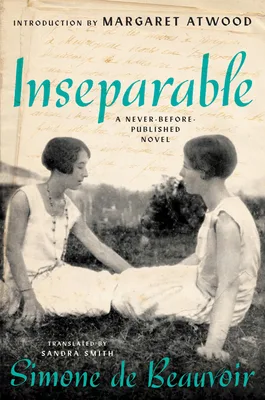



Books like Memoirs of a Dutiful Daughter
See all 12 →