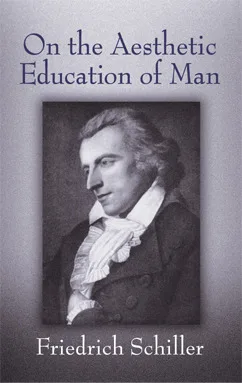
Friedrich Schiller argues that the violent failures of the French Revolution stem from a fundamental split in the human psyche between the sense drive and the form drive. He proposes that modern individuals are fractured, suffering from a tension between their physical desires and their moral duties. To bridge this gap, Schiller introduces the play drive, which finds its fulfillment in aesthetic beauty. By engaging with art, the individual harmonizes their sensory and rational faculties, achieving a state of wholeness necessary for true political liberty and a balanced state.
Students of philosophy and political theory read this work to understand the psychological foundations of social reform. The text appeals to those interested in the German Enlightenment and the transition from Kantian ethics to Romanticism. Readers walk away with a framework for viewing art as a tool for character development rather than mere entertainment. They gain an understanding of how internal psychic alignment serves as a prerequisite for external civic freedom, learning how the cultivation of taste can refine human behavior.
- Published
- 1794
- Language
- EN