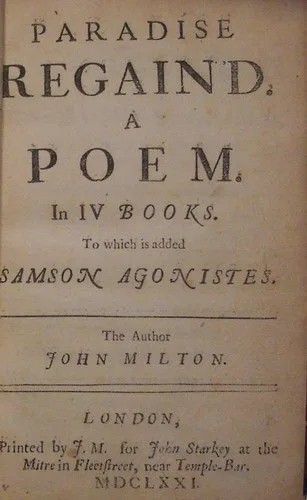
Published in 1671 as a sequel to Paradise Lost, this blank verse poem dramatizes the three temptations of Jesus by Satan in the wilderness, as recorded in the Gospel of Luke. While the earlier epic focused on the fall of humanity through Adam, this narrative centers on the internal discipline and intellectual resistance of the Son of God. The dialogue functions as a theological debate where Satan offers earthly power, classical knowledge, and physical sustenance, only to be rebuffed by scriptural logic and spiritual stoicism. The action concludes with the pinnacle at the temple in Jerusalem, marking the restoration of the relationship between God and man.
This work serves readers interested in Christian theology and the technical development of seventeenth-century epic poetry. It appeals to those studying the transition from physical heroism to internal moral victory. Readers gain an understanding of Miltonic virtue, characterized by passive endurance and the rejection of temporal glory in favor of divine obedience. The text provides a framework for analyzing how individual conscience resists institutional and worldly pressure, offering a concise study of psychological fortification against external persuasion.
Deep, contemplative and open-ended; a demanding read.
Best for readers like The Wisdom Collector. Which reader are you?
- Published
- 1671
- Language
- EN