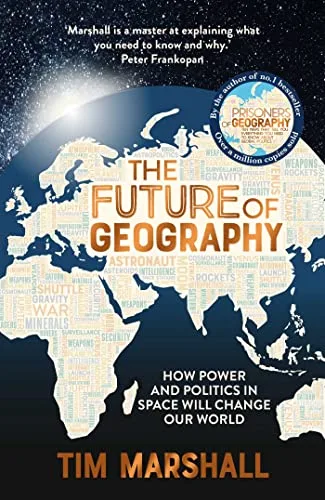
Tim Marshall applies the principles of astropolitics to explain how Earth’s rivalries are moving into the solar system. He identifies the Moon as a strategic platform for resource extraction and deep-space launches, while categorizing low Earth orbit as a critical zone for satellite infrastructure and military surveillance. The book details the Outer Space Treaty’s limitations and the emergence of new power blocs, specifically the competition between the United States and China to establish permanent lunar bases and claim mineral-rich lunar territories.
Students of international relations and geopolitical enthusiasts read this work to understand how geography dictates strategy beyond the atmosphere. Readers gain a technical framework for evaluating the next decade of orbital activity, from the risks of satellite warfare to the logistics of asteroid mining. The text provides a clear map of how physical distance and gravitational wells influence future trade routes and defense policies, shifting the perspective of global politics toward the stars.
Outward-looking; a moderate read.
Best for readers like The Evidence Seeker. Which reader are you?
Insights from The Future of Geography
“The geography of the skies is the new frontier of our age-old struggles.”
Space is just an extension of the land we already fight over. Power moves from the mountains to the orbit of our planets.
“If we don't clear the debris, we could lock ourselves out of the heavens.”
Low Earth orbit is getting crowded. We are turning the sky into a junkyard that might trap us on the ground forever.
“He who controls the moon controls the orbits around the Earth.”
Astropolitics will decide who stays a superpower. Owning the moon isn't sci-fi. It is a calculated military move.
“Water is the gold of the space age.”
Metal and ice matter more than stars. Nations are racing to the lunar south pole just for the water frozen in shadows.
- Published
- 2021
- Publisher
- Simon & Schuster
- ISBN
- 9781668031667
- Language
- EN