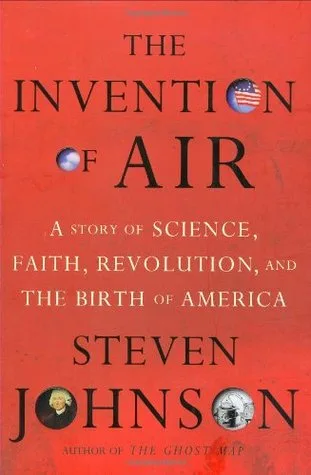
Steven Johnson profiles Joseph Priestley, the eighteenth-century chemist and dissident who identified oxygen and discovered the cycle of photosynthesis. The narrative tracks Priestley’s experimentation with rubber, carbonated water, and bell jars, while linking his scientific work to his radical political and religious views. Johnson highlights the concept of the ecosystem and the interconnectedness of plant life and atmospheric stability. The story follows Priestley’s move from England to Pennsylvania, where his interactions with Thomas Jefferson and Benjamin Franklin integrated scientific inquiry into the founding philosophy of American democracy.
Those interested in the history of science and the Enlightenment read this book to understand how open exchange networks drive innovation. Readers see how physical discoveries, such as the properties of air, directly influenced political theories regarding liberty and education. The book provides a look at the "long zoom" perspective of history, showing how chemistry and biology shape social structures. A reader finishes the text with a clear view of how scientific hobbyists built the foundations of modern energy and governance.
- Published
- 2008
- Language
- EN
More by Steven Johnson
See all →