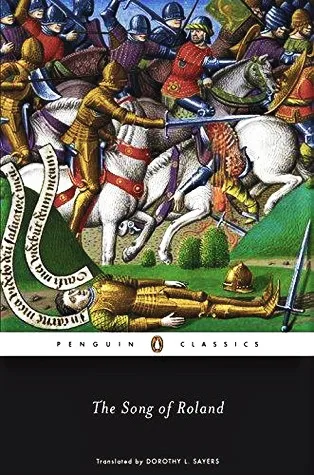
This epic poem recounts the betrayal and death of Roland, a Frankish commander, during the Battle of Roncevaux Pass. While Charlemagne withdraws his army from Spain, the traitor Ganelon conspires with the Saracen King Marsile to ambush the Frankish rearguard. Roland, driven by a rigid code of feudal honor, refuses to blow his ivory horn to signal for reinforcements until his vastly outnumbered troops face annihilation. The narrative centers on the fatal clash between Christian knights and Muslim forces, resulting in the martyrdom of Roland and his companion Olivier.
This text serves students of medieval literature and readers interested in the origins of the chanson de geste. It provides a window into the twelfth-century world of vassalage, religious conflict, and the chivalric ideal. Readers gain a direct understanding of how early European societies conceptualized loyalty, treason, and the spiritual rewards of sacrifice. The poem offers a stark look at the Carolingian mythos and the formal structures of heroic oral tradition passed down through old French verse.
Outward-looking; a moderate read.
Best for readers like The Systems Thinker. Which reader are you?
- Published
- 1115
- Language
- EN