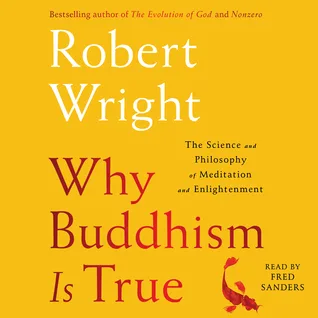
Why Buddhism Is True: The Science and Philosophy of Meditation and Enlightenment
Robert Wright uses evolutionary psychology to explain why the human brain naturally generates illusions, such as road rage or recurring anxieties, which helped our ancestors survive but now cause modern misery. He argues that natural selection designed us to perceive the world in ways that are often false. By examining the brain’s default mode network and the modular theory of mind, Wright illustrates how vipassana meditation serves as a tool to dismantle these biological biases. He aligns the Buddhist concept of emptiness and the non-self with neurological findings, suggesting that secular practice can decouple feelings from habitual reactions.
People interested in the intersection of cognitive science and secular spirituality read this book to understand the biological mechanics behind their impulses. It is suited for those who want a rational justification for mindfulness without relying on supernatural claims. Readers walk away with a framework for viewing their thoughts as mental phenomena rather than absolute truths. This perspective helps individuals reduce the influence of negative emotions and gain more control over their responses to daily stressors by seeing the physical reality of their mental states.
Deep and inward-looking; a moderate read.
Best for readers like The Empathetic Explorer. Which reader are you?
- Published
- 2017
- Language
- EN
More by Robert Wright
See all →


Books like Why Buddhism Is True: The Science and Philosophy of Meditation and Enlightenment
See all 12 →