Books like Six Not So Easy Pieces: Einstein's Relativity, Symmetry, and Space-Time
12 books with a reading profile close to Six Not So Easy Pieces: Einstein's Relativity, Symmetry, and Space-Time by Richard P. Feynman. Deep and outward-looking; a moderate read.
-
1
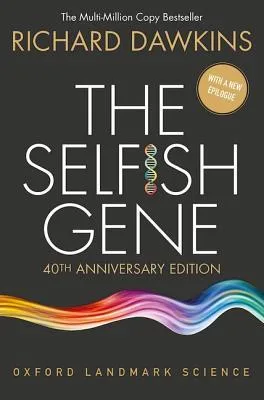
The Selfish Gene
Also deep and outward-looking · academic, theoretical
Richard Dawkins argues that the fundamental unit of selection in evolution is neither the species nor the individual, but the gene.
-
2
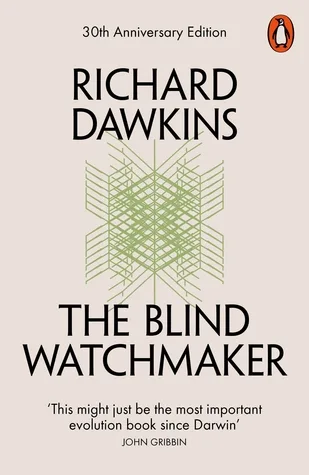
The Blind Watchmaker: Why the Evidence of Evolution Reveals a Universe Without Design
Also deep and outward-looking · academic, theoretical
Richard Dawkins frames his argument against the watchmaker analogy proposed by William Paley, which suggested that complex biological structures necessitate an intelligent designer.
-
3
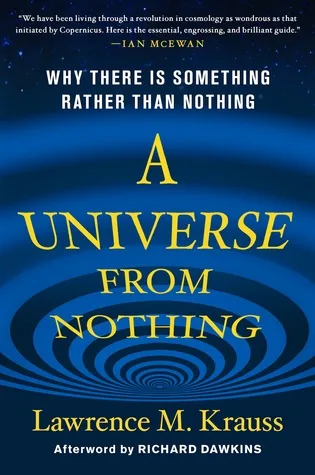
A Universe from Nothing: Why There Is Something Rather Than Nothing
Also outward-looking · academic, theoretical
Lawrence Krauss explains how modern cosmology and particle physics account for the origin of the cosmos without requiring a divine creator.
-
4

Feminism Is for Everybody: Passionate Politics
by bell hooks
academic, theoretical
Bell hooks outlines a vision of feminism rooted in ending sexism, sexual exploitation, and systemic oppression.
-
5

No God but God: The Origins, Evolution and Future of Islam
by Reza Aslan
academic, theoretical
Reza Aslan traces the development of Islam from its beginnings in seventh-century Arabia to its current internal tensions.
-
6

The Road to Serfdom
Also deep and outward-looking · academic, theoretical
Friedrich Hayek argues that government economic planning inevitably leads to the erosion of individual liberty and the rise of totalitarianism.
-
7

Political Ecology
by Paul Robbins
Also deep and outward-looking · academic, theoretical
Paul Robbins examines the friction between ecological systems and human power structures, moving beyond simple explanations of scarcity or overpopulation.
-
8
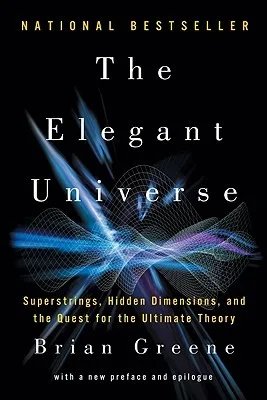
The Elegant Universe: Superstrings, Hidden Dimensions, and the Quest for the Ultimate Theory
by Brian Greene
Also deep and outward-looking · academic, theoretical
Brian Greene explains the conflict between general relativity and quantum mechanics, arguing that string theory resolves this architectural mismatch.
-
9
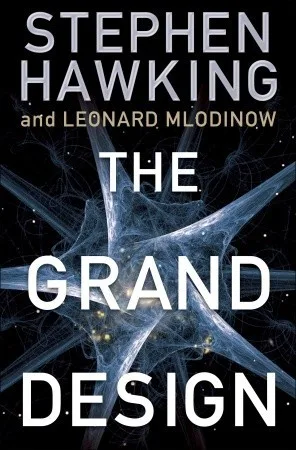
The Grand Design
Also deep and outward-looking · theoretical, accessible
The Grand Design examines the origin of the universe through the lens of M-theory, which proposes that multiple dimensions and a vast multiverse exist beyond our perception.
-
10

Obra completa : Estuche con
Also outward-looking · theoretical, accessible
This three-volume collection tracks the biological and cultural evolution of Homo sapiens from the Stone Age to the digital era.
-
11

A Brief History of Time
Also deep and outward-looking · theoretical, accessible
Stephen Hawking explains the mechanics of the universe, moving from Newtonian gravity and relativity to the subatomic world of quantum mechanics.
-
12

Nexus A Brief History of Information Networks from the Stone Age to AI
Also deep and outward-looking · theoretical, accessible
In Nexus, Yuval Noah Harari examines how information networks function as a mechanism for social control and institutional structure rather than merely a path to truth.
Get picks matched to your own reading on papr.
Get papr
