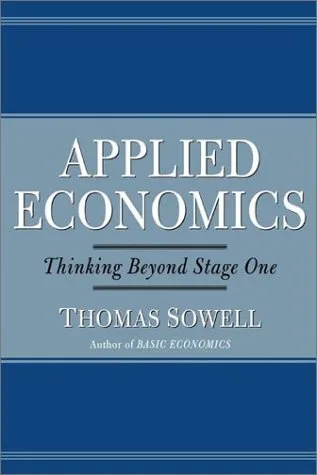
Thomas Sowell argues that political and social policies often fail because decision-makers ignore long-term consequences and the incentives created by systemic changes. He analyzes high-stakes domains including housing, medical care, insurance, and international migration. Instead of looking only at immediate intended results—what he calls Stage One—Sowell uses price theory to trace how individuals adjust their behavior over time. He demonstrates how rent control reduces the housing supply, how healthcare subsidies lead to shortages, and how labor market regulations inadvertently increase unemployment among specific demographics.
This book is intended for readers who want to evaluate public policy through the lens of objective trade-offs rather than moral intentions. It appeals to those in business and economics who require a framework for predicting secondary market reactions. Readers walk away with the ability to identify the hidden costs of government intervention and the skill to predict how external regulations will distort supply and demand in the real world. By the end, they possess a mental model for assessing the sustainability of economic programs.
- Published
- 2003
- Language
- EN