In this pastoral comedy, Rosalind flees the court of her usurping uncle, Duke Frederick, and disguises herself as a young man named Ganymede to survive in the Forest of Arden. She is accompanied by her cousin Celia and the jester Touchstone. Within the woods, they encounter the exiled Duke Senior and a young nobleman named Orlando, who keeps carving love poems into tree trunks. Rosalind, remaining in her male persona, offers to cure Orlando of his lovesickness by having him woo "Ganymede" as if he were Rosalind. The plot weaves together several layers of romantic pursuit and philosophical debates between characters like the melancholy Jaques.
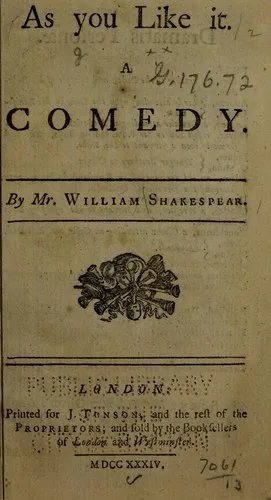
Young readers and students of classical drama turn to this play to understand the mechanics of mistaken identity and the subversion of traditional gender roles through performance. It appeals to those interested in how physical settings, like the transition from a rigid court to an unpredictable wilderness, change human behavior and social hierarchies. Readers walk away with a clear view of how wit and rhetoric function in courtship. They gain an understanding of the 18th-century editorial legacy of Shakespeare’s work through this specific historical printing, observing how early publishers packaged structural verse for private reading.
Balanced in tone; a moderate read.
Best for readers like The Story Seeker. Which reader are you?
- Published
- 1734
- Language
- EN
Quotes by William Shakespeare
More →There is nothing either good or bad, but thinking makes it so.
Hamlet
What's past is prologue.
The Tempest
The fault, dear Brutus, is not in our stars, but in ourselves.
Julius Caesar