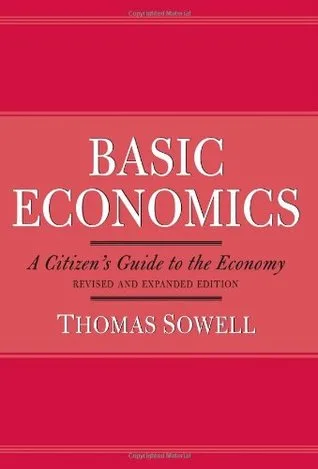
Thomas Sowell explains the fundamental principles of resource allocation through the mechanism of prices. He argues that economics is the study of cause-and-effect relationships involving scarce resources that have alternative uses. The text examines how price signals coordinate global production without central planning, contrasting market-driven outcomes with government interventions like rent control, minimum wage laws, and tariffs. Using historical examples rather than mathematical formulas or charts, Sowell explains how incentives influence the behavior of consumers, producers, and politicians across different types of economies.
This guide serves citizens who want to understand the logic behind public policy and financial news without technical jargon. Readers learn to identify the secondary consequences of economic decisions that are often ignored by political advocates. By the end, a reader can distinguish between political intentions and actual economic results, gaining a framework to evaluate how taxes, trade deficits, and labor regulations impact the standard of living for an entire society.
- Published
- 2000
- Language
- EN