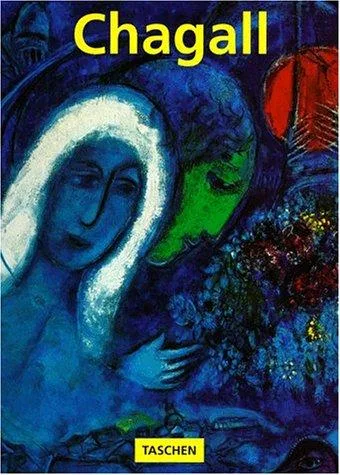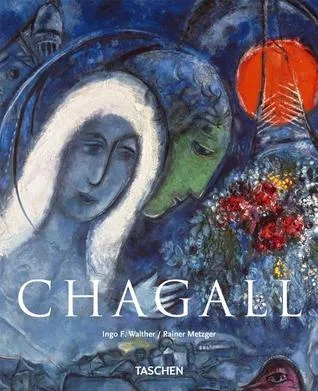
This monograph examines the evolution of Marc Chagall’s visual language, from his early years in the Jewish community of Vitebsk to his immersion in the Parisian avant-garde. Ingo F. Walther tracks how Chagall integrated Jewish folklore and biblical narratives with the structural experiments of Cubism and Fauvism. The text analyzes specific iconographic elements, such as the floating figures, fiddlers, and livestock that populate his dreamlike compositions. It details his use of saturated color sets to evoke emotional states and his transition from oil painting into large-scale stained glass and public murals.
The book serves students and historians interested in Modernism and the intersection of traditional heritage with secular art. Readers gain a technical understanding of Chagall’s color theory and his refusal to adhere to the strict abstraction of his contemporaries. By the end, the reader can identify the historical milestones of the artist's career and explain how his personal displacement influenced his nostalgic aesthetic. This volume provides a factual foundation for recognizing the symbolic motifs that define 20th-century visionary art.
- Published
- 1987
- Language
- EN