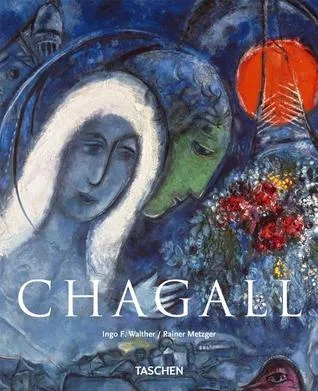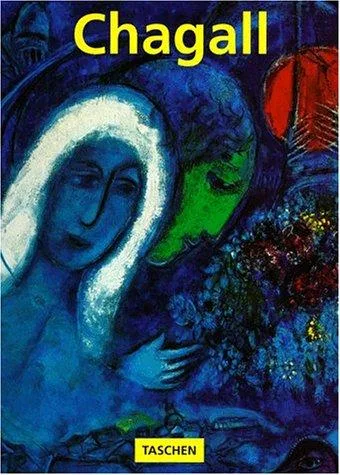
Ingo F. Walther and Rainer Metzger trace the chronological progression of Marc Chagall’s career, beginning with his childhood in the Jewish shtetl of Vitebsk and moving through his formative years in the Parisian avant-garde. The text examines how he integrated Eastern European folklore with the structural experiments of Cubism and the vibrant palettes of Fauvism. It details specific artistic phases, including his work on large-scale stained glass windows, stage sets for the ballet, and grand ceiling murals. The authors focus on his recurring iconography, such as levitating figures, fiddlers, and symbolic animals, while documenting his survival through two world wars and several exiles.
Art historians and students of twentieth-century modernism use this volume to understand the technical evolution of a painter who remained outside specific schools like Surrealism. Readers gain a clear timeline of Chagall's stylistic shifts and an analysis of how his religious heritage influenced his secular art. The book provides a visual reference for distinguishing between his early Russian compositions and his later Mediterranean period, leaving the reader with a factual inventory of his most significant public and private commissions.
- Published
- 1987
- Language
- EN