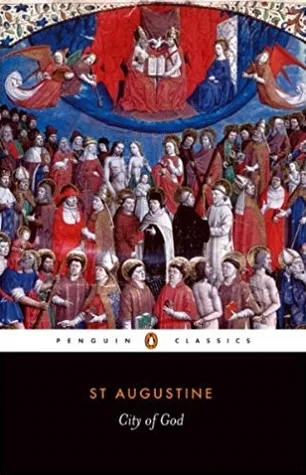
Augustine of Hippo wrote this treatise to defend Christianity against claims that the abandonment of traditional Roman deities caused the Visigoth sack of Rome in 410 CE. He contrasts two metaphorical societies: the City of Man, driven by self-love and earthly ambition, and the City of God, defined by the love of the creator and eternal peace. The text systematically refutes pagan mythology and Neoplatonism while establishing a linear theology of history. Augustine argues that divine providence governs the rise and fall of secular empires, moving humanity toward an ultimate final judgment.
Scholars of political philosophy and theology read this work to understand the foundational relationship between church and state in Western thought. It provides a framework for interpreting historical suffering and the limitations of secular government. Readers gain a rigorous vocabulary for discussing original sin, human will, and the dual nature of citizenship. By the end, the audience understands how to distinguish temporary political stability from the pursuit of permanent spiritual goals, providing a sense of direction amidst societal collapse.
Deep, inward-looking and contemplative; a demanding read.
Best for readers like The Wisdom Collector. Which reader are you?
- Language
- EN
Quotes by Augustine of Hippo
More →The soul becomes dyed with the color of its thoughts.
Confessions
Grant me chastity and continence, but not yet.
Confessions
Faith is to believe what you do not see; the reward of this faith is to see what you believe.
Sermons