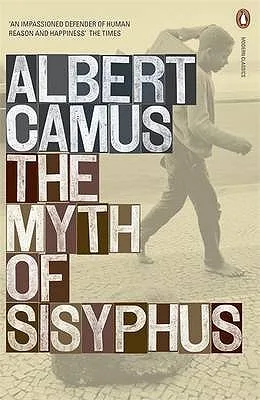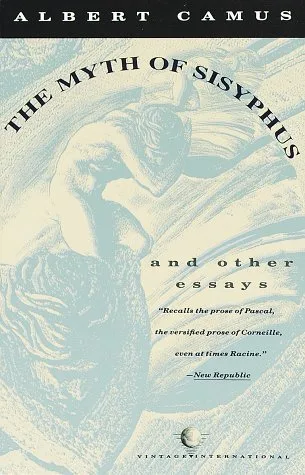
Albert Camus addresses the tension between the human drive for logic and the silent, irrational universe, a conflict he defines as the Absurd. He begins with the question of whether life’s inherent lack of meaning justifies suicide, ultimately rejecting self-destruction in favor of conscious revolt. Central to the work is the figure of Sisyphus, condemned to push a boulder up a hill for eternity only for it to roll back down. Camus argues that Sisyphus finds victory in his awareness of the futility, transforming his repetitive labor into a state of defiant joy by accepting the struggle itself as sufficient.
Readers interested in existential philosophy and the psychological management of nihilism seek this text for a framework on living without external hope or religious certainty. It appeals to those who feel alienated by societal structures and want a rational justification for persistence. The reader gains a strategy for maintaining personal integrity through an acknowledgement of life's limitations. By adopting the perspective of the absurd hero, one learns to replace a search for higher purpose with the cultivation of immediate experience and individual freedom.
Deep, contemplative and open-ended; a demanding read.
Best for readers like The Wisdom Collector. Which reader are you?
- Published
- 1942
- Language
- EN
Quotes by Albert Camus
More →One must imagine Sisyphus happy.
The Myth of Sisyphus
The only way to deal with an unfree world is to become so absolutely free that your very existence is an act of rebellion.
The Rebel
In the depth of winter, I finally learned that within me there lay an invincible summer.
Return to Tipasa