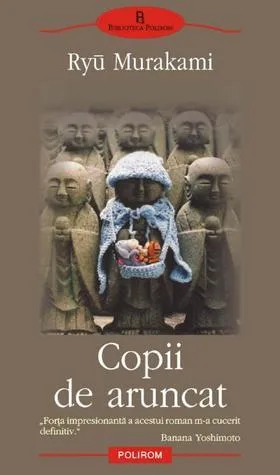
The narrative centers on Kiku and Hashi, two infants who survive being abandoned in humid train station lockers. Raised in a sterile institution on an isolated island, the boys eventually migrate to the decaying urban sprawl of Tokyo. Kiku seeks release through competitive pole-vaulting and a quest for a lethally toxic substance called Datura, while Hashi navigates the predatory world of pop music stardom. Their lives are driven by the lingering rhythmic sound of an artificial heart, a sensory trauma that fuels their descent into madness, chemical addiction, and industrial sabotage.
Readers interested in transgressive fiction and the psychological impact of urban isolation will find a stark examination of social detachment. The book appeals to those who study how institutional neglect manifests as physical violence and societal rejection. A reader finishes the text with a concrete understanding of how individual trauma can escalate into a desire for total systemic destruction. It provides a technical, unsentimental look at the intersection of biological survival instincts and the suffocating atmosphere of a high-tech wasteland.
Deep, inward-looking, contemplative, open-ended and thought-provoking; a demanding read.
Best for readers like The Wisdom Collector. Which reader are you?
Insights from Copii de aruncat
Kiku are o forță brută care mă sperie și mă întristează. Vrea să distrugă tot ce l-a respins, chiar și orașul ăsta imens.
“Lumea începe cu un zgomot de metal.”
Kiku și Hashi au fost lăsați în dulapuri de mici. E groaznic să te gândești cum primii tăi ani sunt marcați de sunetul metalic al unei uși încuiate.
Băieții ăștia caută sunetul ăla primordial, bătăile inimii mamei. Parcă toată furia lor vine din liniștea aia apăsătoare de la început.
Hashi își transformă vocea într-o armă și un refugiu în același timp. Muzica lui e singurul mod prin care poate să nu se dezintegreze de tot.
- Published
- 2005
- Publisher
- Polirom
- ISBN
- 9789734600601
- Language
- RO