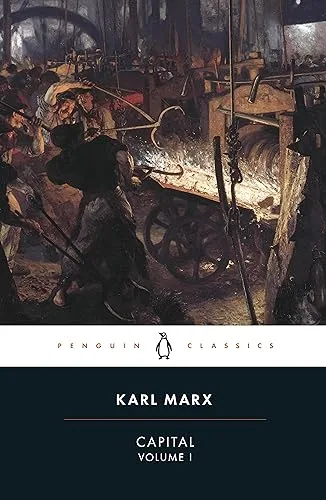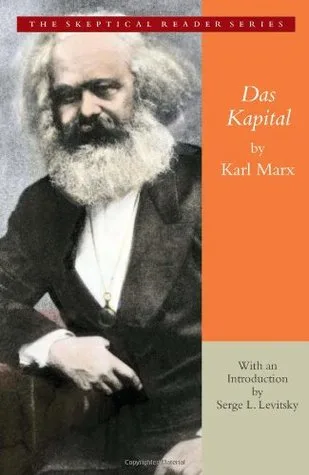
Karl Marx analyzes the economic mechanics of the capitalist mode of production, focusing on how value is generated and distributed. He introduces the labor theory of value, arguing that the exchange value of a commodity is determined by the socially necessary labor time required for its creation. The text details the circuit of capital, specifically how owners purchase labor power to extract surplus value, which becomes profit upon sale. Marx examines the historical transition from feudalism to industrial manufacturing, the impact of machinery on workers, and the inherent tendency toward wealth concentration.
Economists, historians, and political theorists study this work to understand the structural tensions between labor and capital. Readers gain a technical framework for evaluating how market systems prioritize capital accumulation over social stability. It provides a vocabulary for discussing class struggle and the cyclical crises endemic to private ownership of the means of production. By finishing this volume, a reader learns to identify the specific social relations hidden behind everyday transactions and the systemic incentives that drive wage competition and industrial expansion.
Deep, outward-looking and growth-minded; a demanding read.
Best for readers like The Systems Thinker. Which reader are you?
- Published
- 1867
- Language
- EN
Quotes by Karl Marx
More →The philosophers have only interpreted the world in various ways; the point is to change it.
Theses on Feuerbach