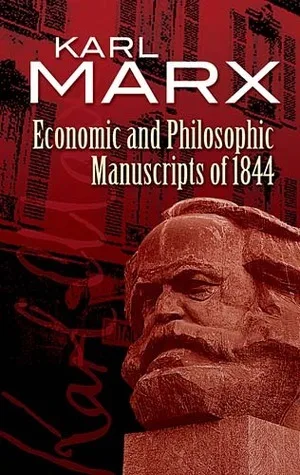
In these early notebooks, Marx analyzes the clash between capital and labor through the lens of private property and competition. He introduces the theory of alienation, arguing that under industrial capitalism, workers become estranged from the products of their labor, the act of production, their own human essence, and one another. The text evaluates the mechanisms of rent, wages, and profit while critiquing classical economists like Adam Smith. Marx asserts that the market system reduces the human worker to a mere commodity, creating a social structure where material wealth accumulates among owners while the laborers who produce it experience physical and spiritual exhaustion.
Students of political economy and sociology read this work to understand the philosophical foundations of Marxist critique. It appeals to readers interested in how economic systems influence individual psychology and social relationships. By studying these manuscripts, a reader gains a specific framework for analyzing how the modern division of labor impacts human identity. They walk away with a vocabulary for discussing the commodification of life and an understanding of the historical transition from classical liberal theory to radical social critique.
- Published
- 1844
- Language
- EN
Quotes by Karl Marx
More →The philosophers have only interpreted the world in various ways; the point is to change it.
Theses on Feuerbach