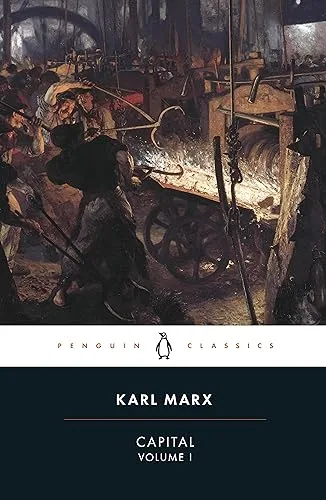
Capital: A Critique of Political Economy Volume 1
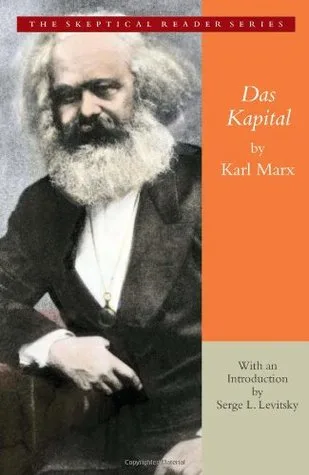
Karl Marx analyzes the mechanics of the capitalist mode of production, centering on the relationship between labor and value. He defines the commodity as the fundamental unit of trade and introduces the labor theory of value, arguing that the worth of a product derives from the socially necessary labor time required for its creation. Marx details the process of capitalist accumulation, whereby workers sell their labor power to owners who then extract surplus value. This framework explains how profit originates from unpaid labor and the systematic expansion of industrial capital.
Students of political economy and sociology study this text to understand the historical development of wage labor and class structures. Readers gain a technical vocabulary for discussing the exploitation of the working class and the internal contradictions of global markets. The book provides a methodology for examining how the pursuit of profit influences social relations and legislative history. It serves as a foundational reference for those analyzing economic inequality and the structural evolution of private property and production within modern industrial societies.
Deep and outward-looking; a demanding read.
Best for readers like The Deep Diver. Which reader are you?
- Published
- 1887
- Language
- EN
Quotes by Karl Marx
More →The philosophers have only interpreted the world in various ways; the point is to change it.
Theses on Feuerbach