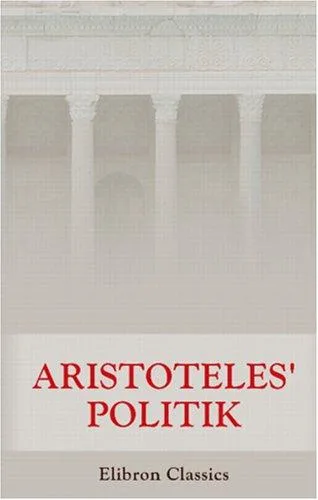
Aristotle analyzes the structure of the Greek city-state, or polis, by examining the organic development of human associations from the household to the village. He classifies six forms of government—monarchy, aristocracy, and polity, alongside their perversions: tyranny, oligarchy, and democracy. The text argues that man is a political animal by nature, meant to live under laws that promote virtue. Aristotle discusses the distribution of power, the necessity of a middle-class influence for stability, and the role of public education in maintaining the constitutional order.
Scholars of political theory and history read this work to understand the origins of constitutional design and civic responsibility. It provides a framework for evaluating how different legislative systems impact the behavior of citizens and the durability of the state. Readers gain a technical vocabulary for discussing justice, property rights, and the balance of executive and judicial functions. Historically, owners of this 1492 edition utilized these classical observations to navigate the shifting power dynamics of Renaissance Europe and the re-emergence of republican ideals.
- Published
- 1492
- Language
- EN
Quotes by Aristotle
More →We are what we repeatedly do. Excellence, then, is not an act, but a habit.
Nicomachean Ethics
More by Aristotle
See all →
Readers also enjoyed