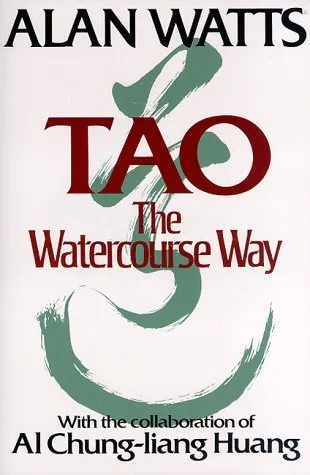
This final work by Alan Watts details the core principles of Taoist philosophy, specifically focusing on the concepts of Wu Wei, or non-forcing, and Te, the innate potency of natural life. Watts treats the Tao not as a static deity but as a rhythmic process, comparing its flow to the movement of water. He examines the evolution of the Chinese language and its impact on thought, contrasting the organic intelligence of the natural world with the rigid definitions found in Western intellectual traditions. The text includes specific calligraphy and historical context regarding the I Ching and the Lao-Chuang tradition.
Students of East Asian philosophy and individuals seeking an alternative to linear, goal-oriented living read this book to understand the mechanics of spontaneity. The reader gains a practical vocabulary for conceptualizing harmony without effort. By studying the distinctions between formal social structures and the "watercourse way" of nature, the reader learns to navigate complex situations by following the path of least resistance rather than applying brute force or conventional logic.
Deep, contemplative and open-ended; a demanding read.
Best for readers like The Wisdom Collector. Which reader are you?
- Published
- 1975
- Language
- EN