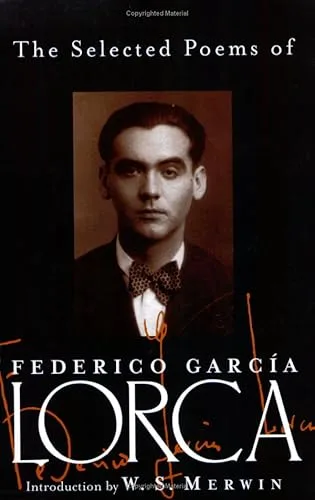
This collection gathers the lyrical work produced by Federico García Lorca before his execution in 1936. The text centers on the intersections of Andalusian folklore, Romani culture, and the rigid social hierarchies of rural Spain. Through precise imagery of knives, horses, and olive groves, the verses examine the fatalism inherent in Mediterranean life. Later sections incorporate the industrial alienation he witnessed in New York, contrasting organic symbols with the geometric coldness of modern architecture and social displacement.
Students of twentieth-century verse and those interested in the Spanish Civil War era read this book to understand the tension between traditional song forms and surrealist experimentation. The reader learns how Lorca adapted the "cante jondo" tradition into a sophisticated literary framework. They finish the volume with a clear grasp of how local landscapes and historical grief can be translated into universal symbols of longing and sudden violence.
Deep, inward-looking and open-ended; a moderate read.
Best for readers like The Wisdom Collector. Which reader are you?
- Published
- 1936
- Language
- EN