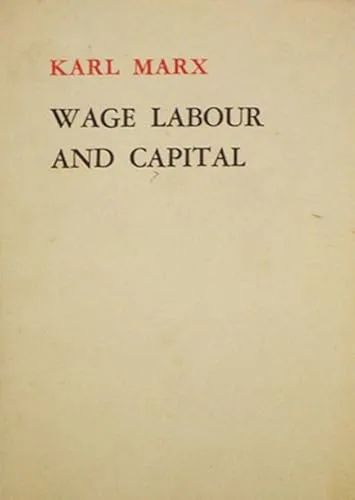
Karl Marx details the economic relationship between the property-owning capitalist and the hired worker. He argues that labor-power is a commodity sold by the worker to survive, rather than a share in the finished product. The text breaks down how the cost of labor is determined by the minimum required for the worker’s maintenance and reproduction. Marx further analyzes how the introduction of machinery and the division of labor increase competition among workers, leading to a decline in real wages even when nominal wages appear to rise.
Students of political economy and labor history read this work to understand the mechanical functions of surplus value and capital accumulation. It provides a framework for analyzing why real wages stagnate while industrial productivity Grows. Readers walk away with a technical understanding of the antagonisms between profit and wages. The book explains why the expansion of capital inevitably changes the social conditions of the working class and the internal pressures of a competitive marketplace.
- Published
- 1891
- Language
- EN
Quotes by Karl Marx
More →The philosophers have only interpreted the world in various ways; the point is to change it.
Theses on Feuerbach