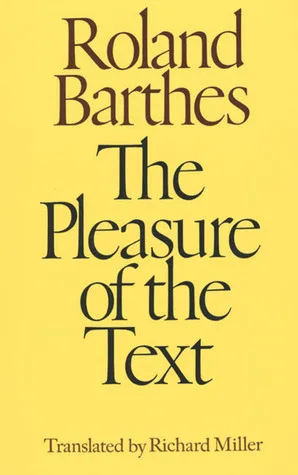
Roland Barthes distinguishes between two distinct modes of reading: "plaisir" and "jouissance." The first represents a comfortable, conformist satisfaction derived from texts that reinforce the reader’s cultural expectations and identity. The second, translated as bliss, describes a disruptive, near-erotic loss of self that occurs when a text breaks formal conventions and linguistic structures. Through a series of fragmented meditations, Barthes argues that the body, rather than just the intellect, reacts to the grain of the voice and the rhythmic gaps in writing. He focuses on how the modern reader finds gratification in the friction between traditional narrative and avant-garde subversion.
This essay attracts literary theorists and students of structuralism seeking to understand the physical and psychological dimensions of consumption. Readers engage with these pages to move beyond mere interpretation and instead analyze their own internal sensations during the act of reading. The text provides a framework for identifying the specific moments where language ceases to be a tool for communication and becomes a site of intense, private sensation. One finishes the book with a vocabulary for articulating how a sentence can physically unsettle or satisfy the person experiencing it.
Deep, inward-looking, contemplative and open-ended; a demanding read.
Best for readers like The Literary Connoisseur. Which reader are you?
- Published
- 1973
- Language
- EN